 Built In Oasis


AI Due Diligence Machine
Functional DemoA first-pass AI diligence analyst that builds an acquisition risk profile from public data, APIs, and uploaded documents.
An AI acquisition-intelligence platform that surfaces and scores off-market acquisition targets from public business signals.
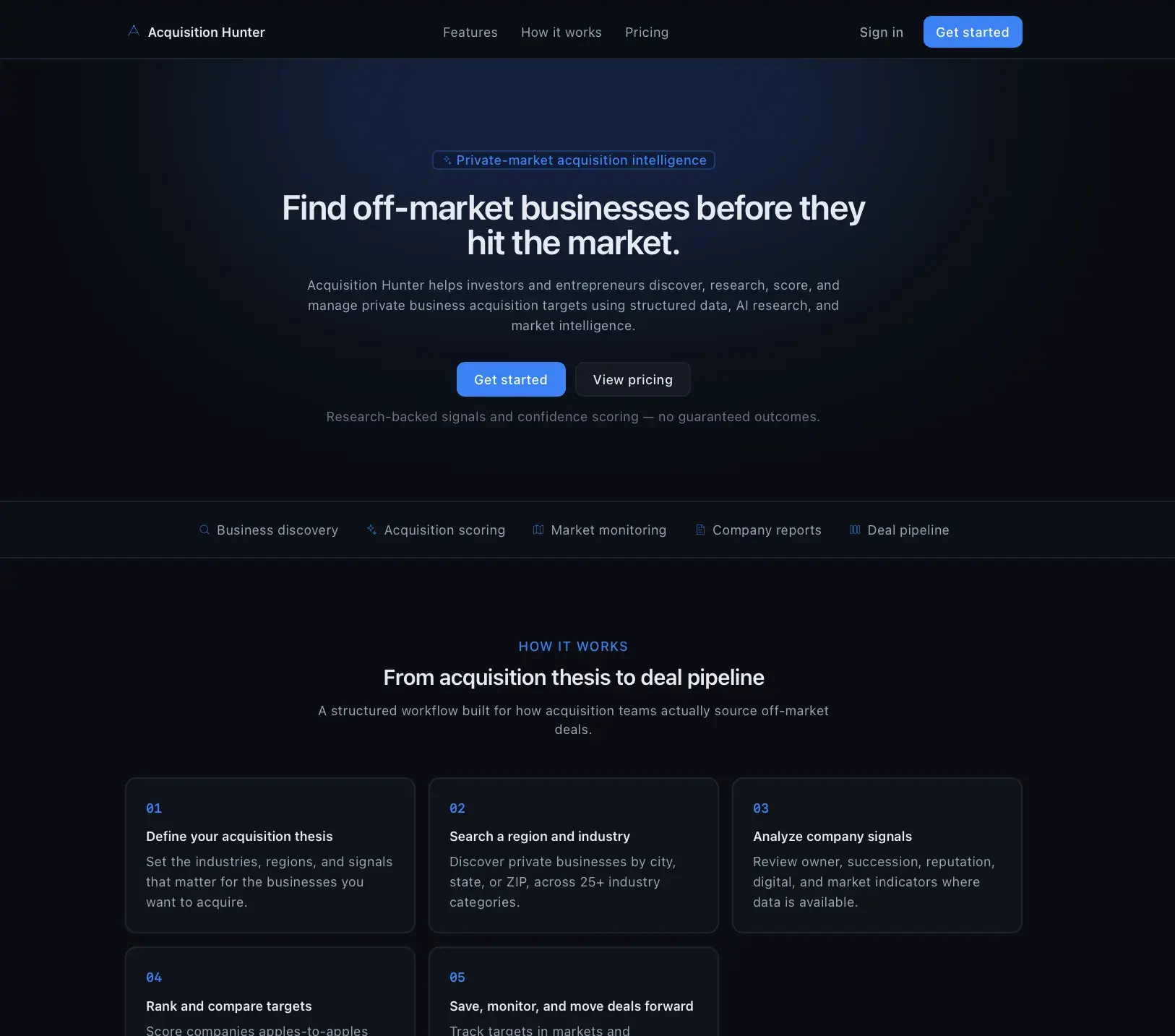
Acquisition teams burn heavy analyst time hunting off-market targets, and the signals that suggest a business might sell — aging ownership, review decay, digital neglect, hiring slowdowns, legal filings — sit scattered across dozens of public sources. By the time a business becomes a brokered deal, competitors already know about it.
Built for Private equity firms, family offices, search funds, strategic acquirers, holding companies, roll-up operators, independent sponsors, and M&A sourcing teams.
AI Acquisition Hunter discovers businesses worth acquiring before they hit the market. Users search by geography and industry to get a ranked list of acquisition opportunities, then open company profiles that aggregate public business, review, website/SEO, hiring, and legal signals into transparent, explainable scores — acquisition readiness, distress, succession risk, modernization upside, market position, timing, and confidence. Each target gets an AI-generated acquisition thesis grounded only in stored signals, plus saved-target pipelines, alerts, and boardroom-ready PDF/CSV reports. Careful, probabilistic language and source citations keep it compliant and non-defamatory.
The system is a multi-source intelligence pipeline: provider adapters normalize and deduplicate business data, a weighted entity-resolution engine matches companies across sources, and append-only snapshot tables preserve signal and score history with versioning. Scoring is transparent and rules-based with per-score explanations and supporting/opposing signals, background enrichment runs on a Redis-backed queue, and an AI thesis generator is constrained to cited signals without hallucinating facts. Auth includes org-scoped RBAC and TOTP two-factor.
This is not a generic lead database. It is a predictive acquisition intelligence system that finds off-market targets before they appear on the market.
Business Discovery Engine
Find companies by city, state, zip, radius, industry, or keyword across 25 industry presets.
Entity Resolution Engine
Match the same company across sources using weighted name, address, phone, domain, and ID matching.
Review Intelligence Layer
Track rating trends, review velocity decay, sentiment, and owner response drop-off over time.
Website & Digital Weakness Layer
Detect outdated CMS, poor page speed, weak SEO, and missing conversion funnels as modernization upside.
Hiring & Workforce Signal Layer
Read job posting trends, hiring silence, and public layoff signals from workforce data.
Legal, Filing & Public Risk Layer
Surface entity status, lawsuits, liens, and bankruptcy indicators labeled by verification level.
Succession Risk Layer
Estimate ownership transition risk from business age, founder tenure, and succession visibility.
Competitor & Market Comparison
Compare a company against local competitors on reviews, SEO, website quality, and category visibility.
Scoring Engine
Produce transparent 0-100 scores with explanations, supporting and opposing signals, and versioning.
AI Acquisition Thesis Generator
Write an analyst-grade thesis with positive signals, risks, seller angle, and missing data.
Search, Filters & Ranking
Filter and sort targets by geography, size, and every score dimension for fast sourcing.
Saved Targets & Pipeline
Manage targets through stages from New Target to Contacted with notes and outreach tracking.
Alerts & Monitoring
Notify on score increases, review spikes, legal signals, and new theses for watched companies.
Reports & Exporting
Generate boardroom-ready company PDFs, CSVs, market reports, and thesis exports with citations.
Admin & Data Source Management
Manage provider registry, import logs, retries, source freshness, and cost tracking.
Modular Provider Adapters
Integrate discovery, firmographic, review, digital, hiring, and legal data sources through adapters.
Composite Opportunity Score
How likely the business is to entertain an acquisition conversation.
Operational, financial, reputational, legal, or workforce stress indicators.
Aging ownership, long-tenured leadership, or limited visible succession.
Value an acquirer could create from digital and operational gaps.
Competitive standing in the local market versus competitors.
Whether recent signal acceleration makes now a good time to reach out.
How much reliable, fresh, agreeing data supports the thesis.
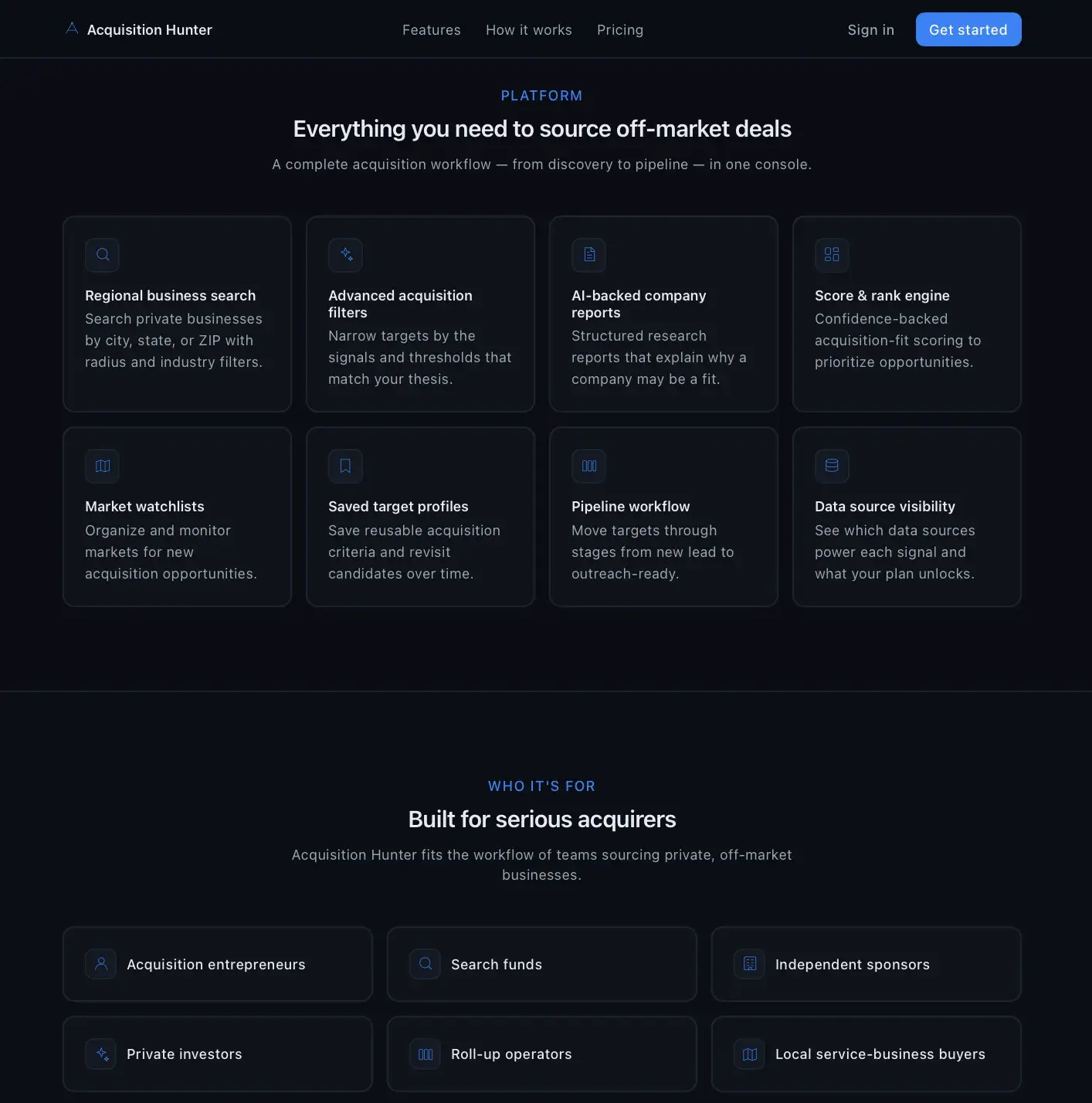
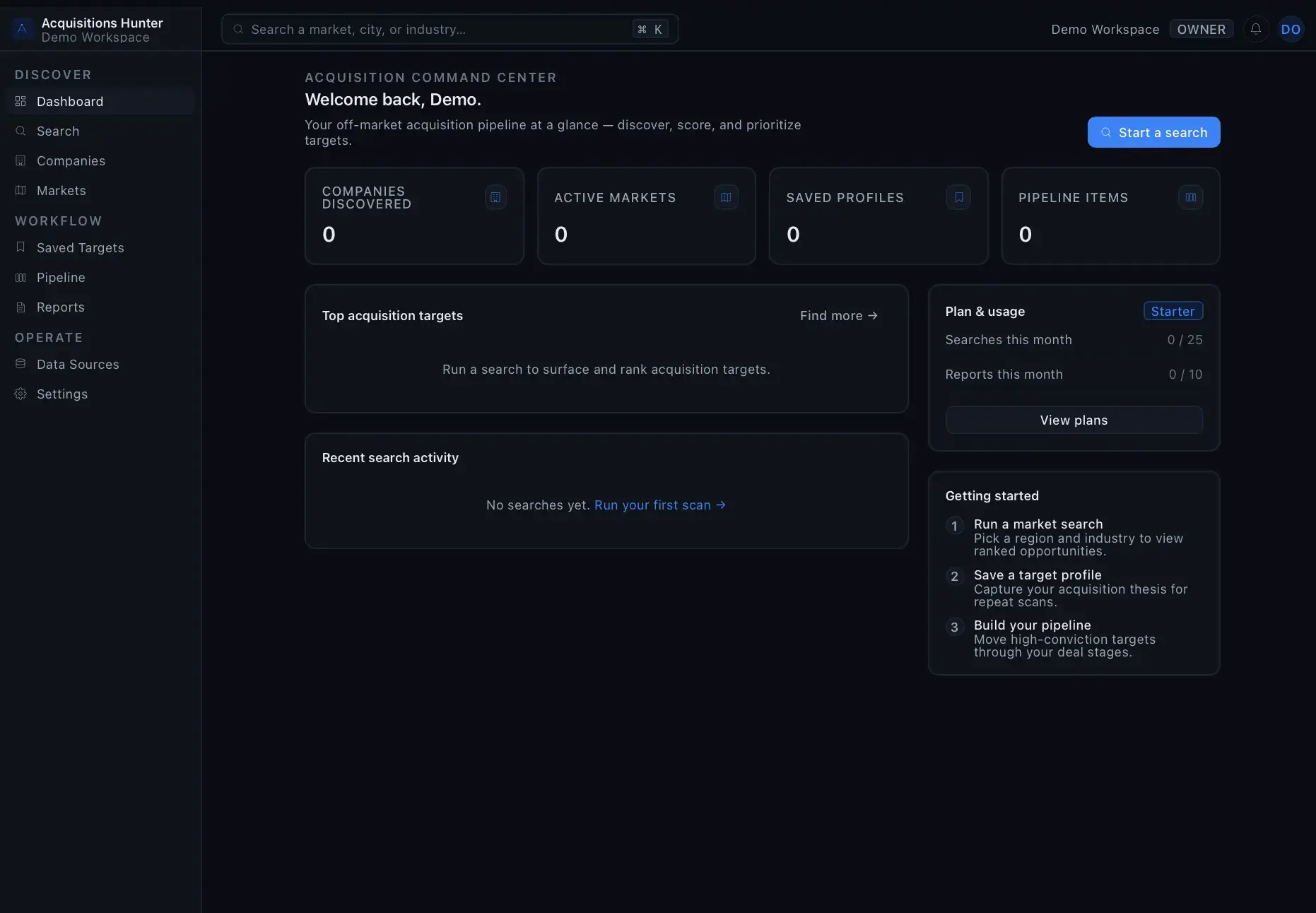
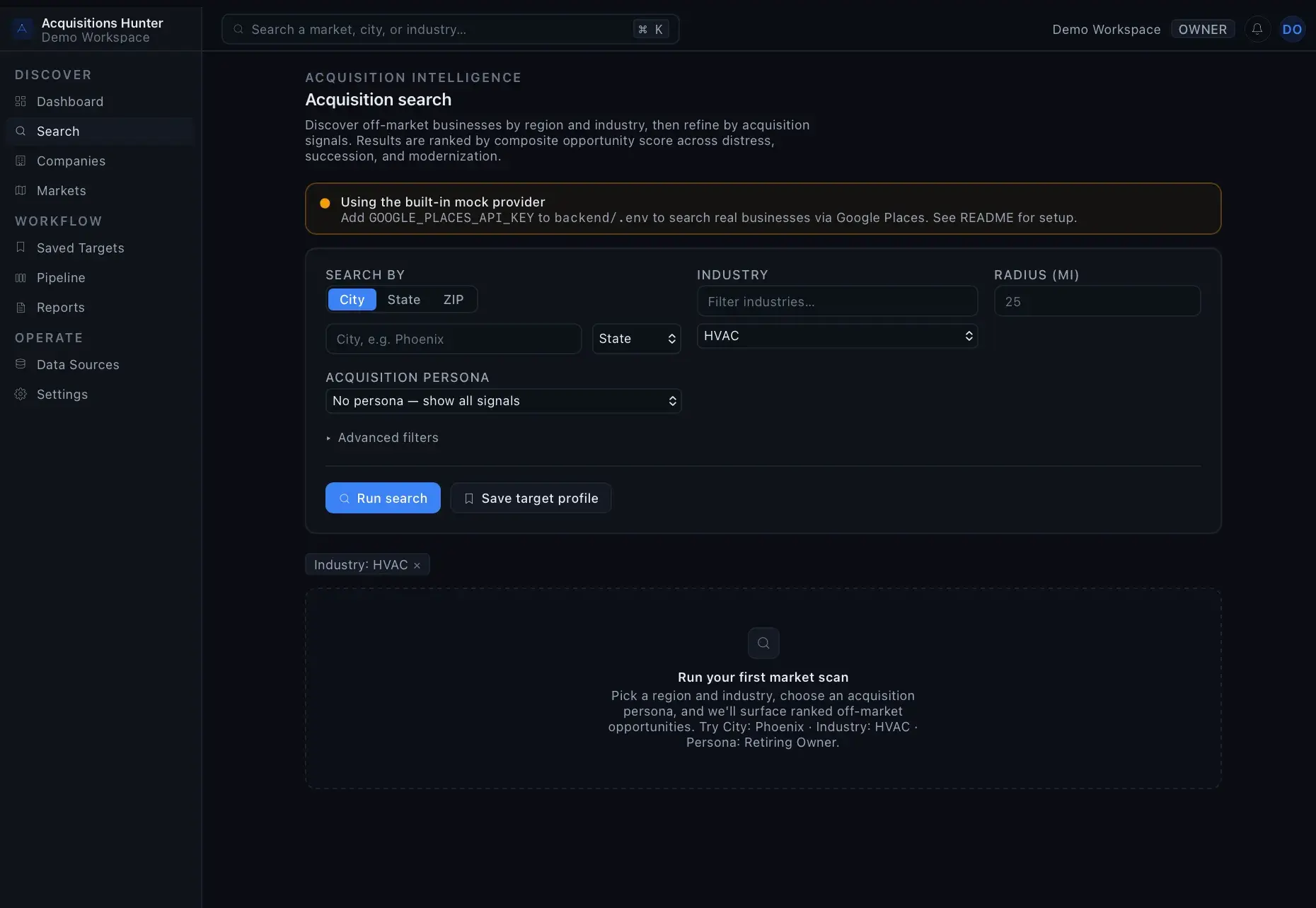
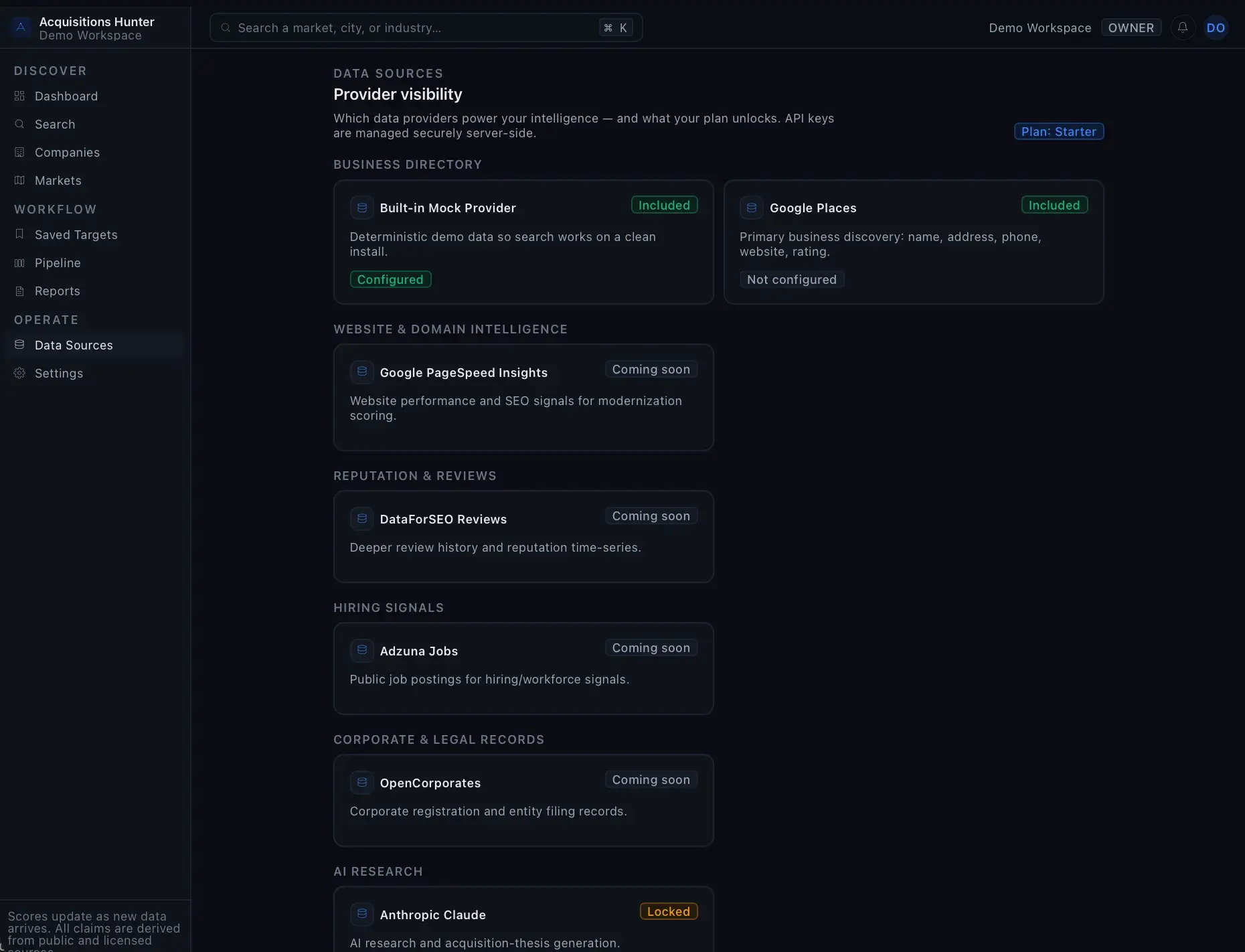
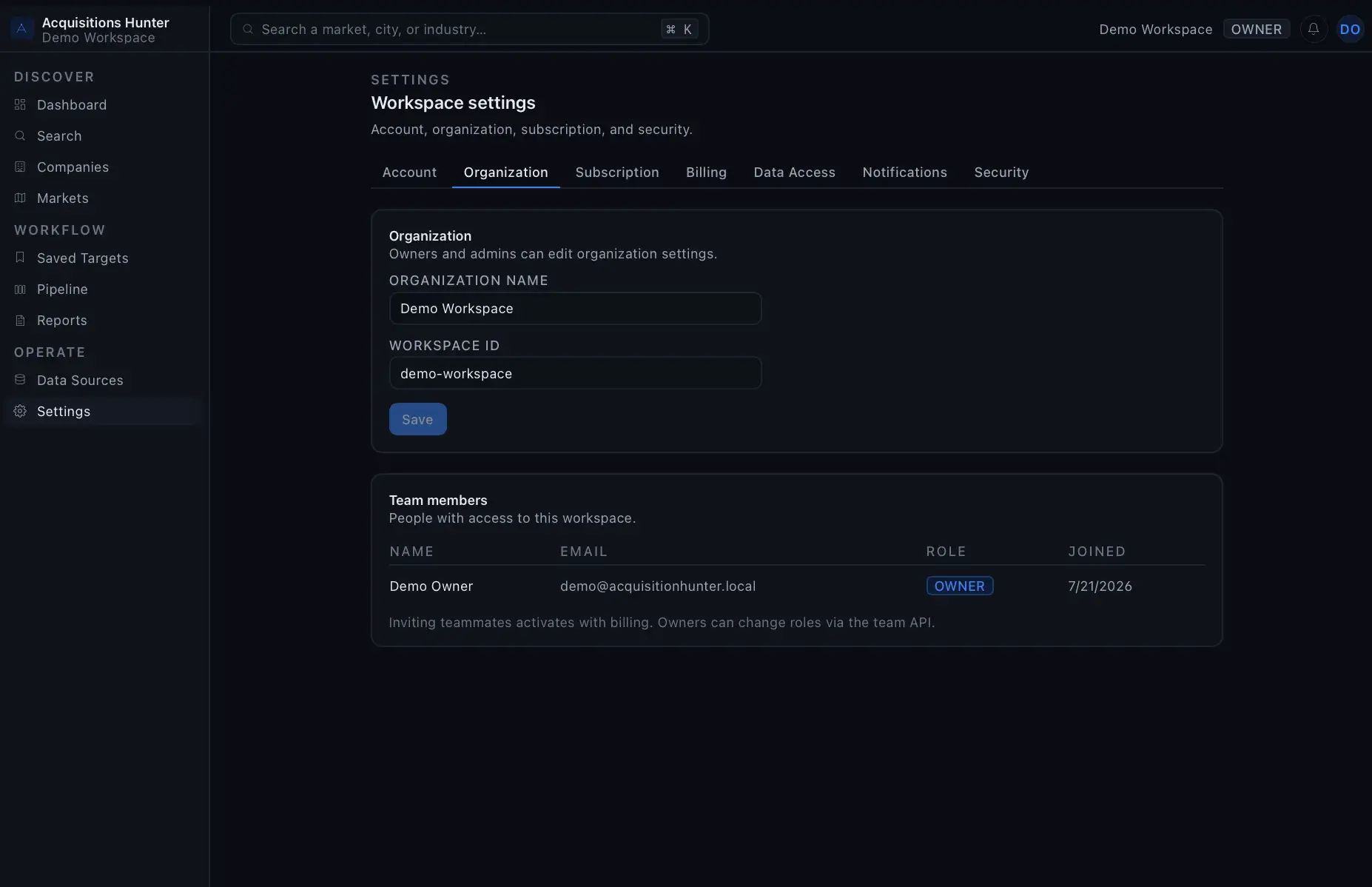
A separate Express/Node backend and Next.js frontend. The backend uses Prisma over PostgreSQL, JWT authentication with TOTP 2FA, and a BullMQ/Redis queue for background enrichment and report jobs. External data providers (Google Places, PageSpeed Insights, and others) sit behind adapters with deterministic mock fallbacks; Anthropic Claude generates acquisition theses; Stripe handles billing. The stack is containerized with Docker.
A first-pass AI diligence analyst that builds an acquisition risk profile from public data, APIs, and uploaded documents.
Strategy-based real estate deal-analysis SaaS that models rentals, flips, BRRRR, and creative-finance deals in minutes.
Multi-tenant AI content and growth operating system that runs a portfolio of apps as one AI-managed business.
Start a project and reference this one — the conversation begins with what you have already seen.
Start a project