 Built In Oasis


Marketing Master
Functional DemoMulti-tenant AI content and growth operating system that runs a portfolio of apps as one AI-managed business.
Fraud defense layer for logistics teams that scores risk before freight moves or money is paid.
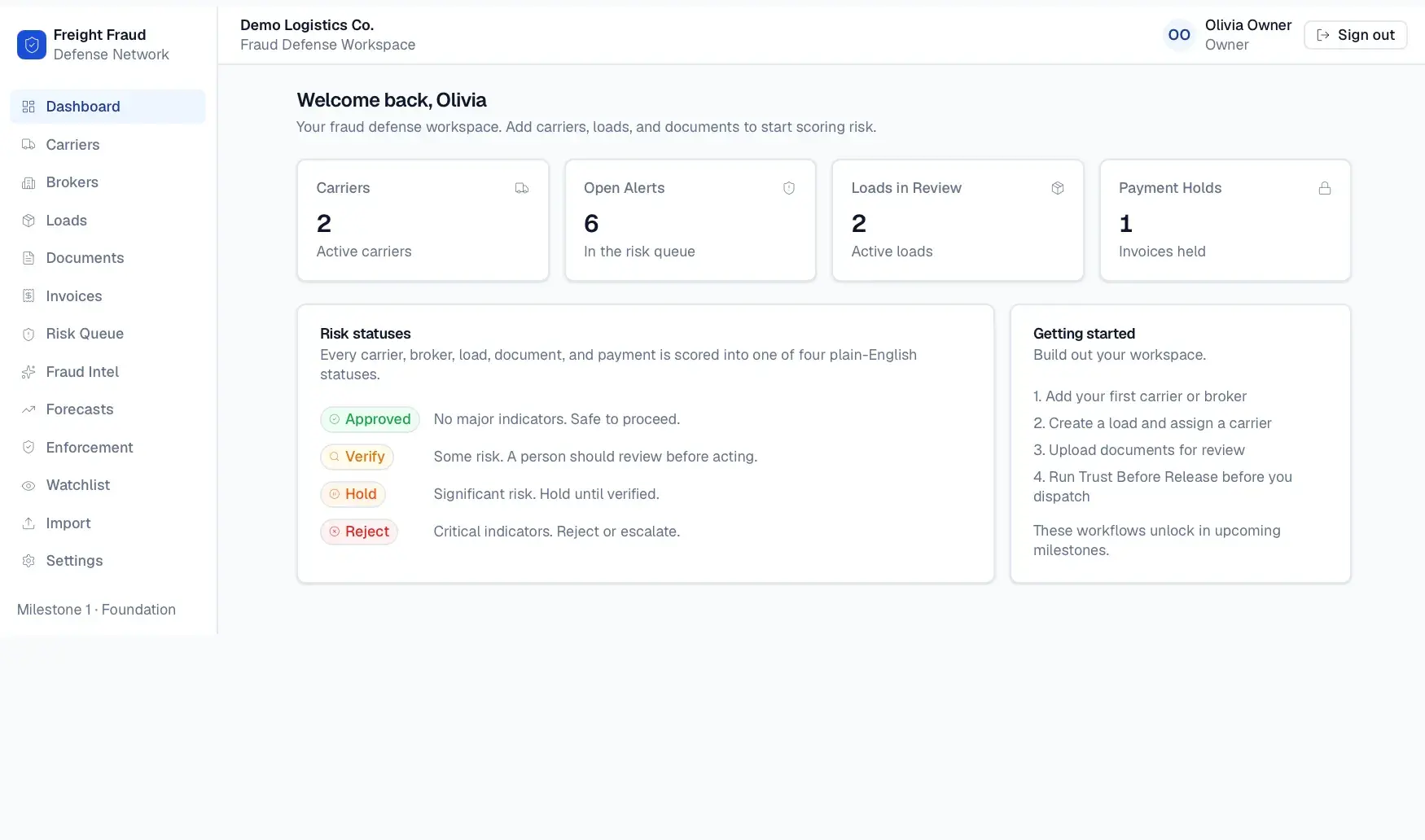
Freight fraud is rising across logistics, exposing companies to fake carriers, double brokering, broker impersonation, spoofed domains, edited certificates of insurance, fake invoices, and payment-redirection scams. Most teams defend against this with manual checks, tribal knowledge, inbox review, spreadsheets, and disconnected systems. This fragmented process leaves gaps that let fraudulent carriers, documents, and payment changes slip through before a load is released or an invoice is paid.
Built for Freight brokers, 3PLs, carrier onboarding and dispatch teams, compliance and finance/AP teams, and logistics risk and fraud investigators.
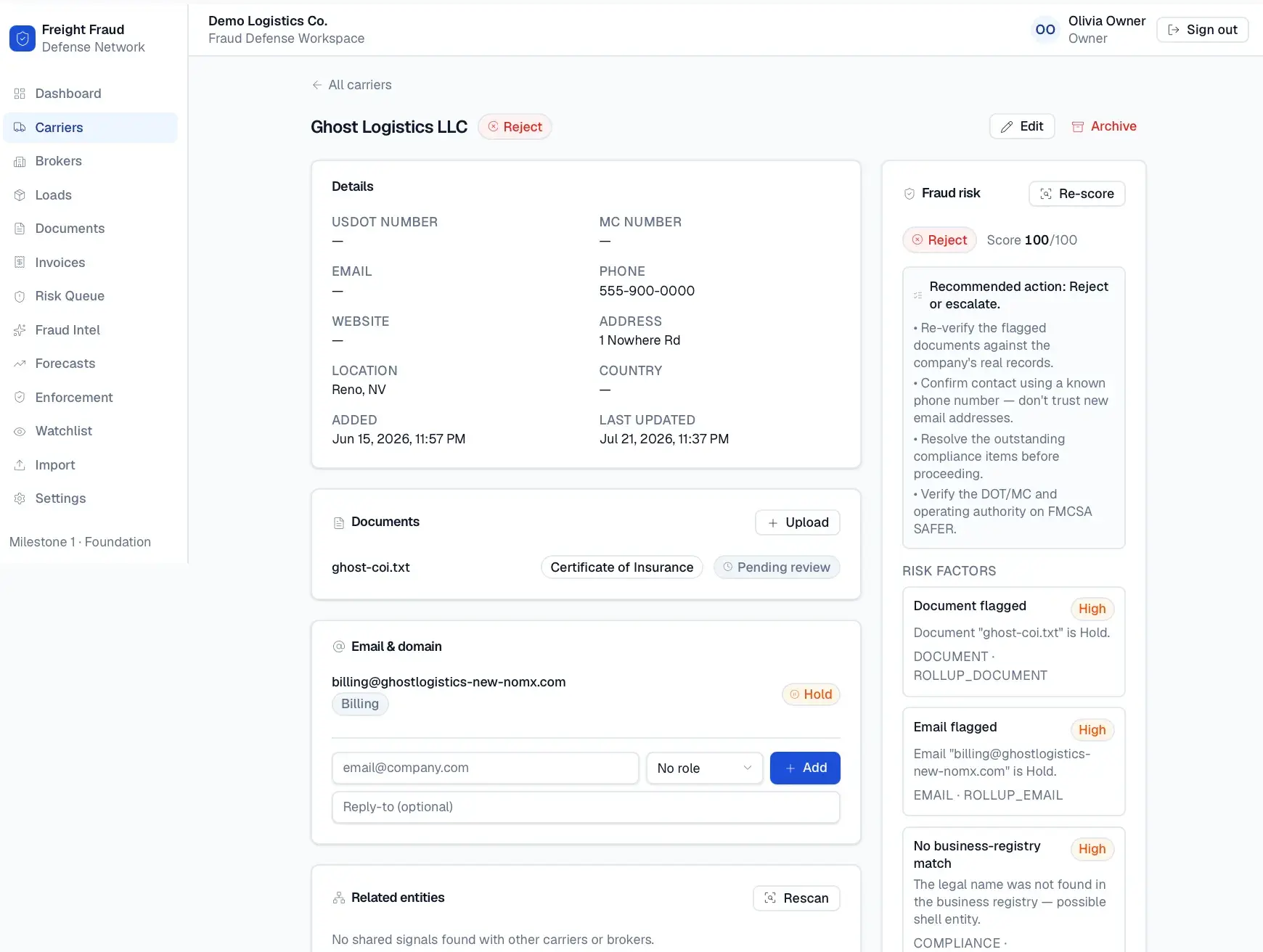
Freight Fraud Defense Network scores brokers, carriers, documents, emails, domains, loads, invoices, and payment changes for fraud risk, then gives teams a simple, explainable decision before they release freight or pay. Each evaluation produces a 0-100 score, a status (Approved, Verify, Hold, Reject), a confidence level, plain-English reasons, a recommended action, an evidence list, and an audit trail. Risk is assessed across multiple categories including company identity, email and domain, document authenticity, load behavior, payment and invoice, and network relationships between entities. It is designed to feel like a clean security command center for non-technical operations users rather than a complex compliance tool.
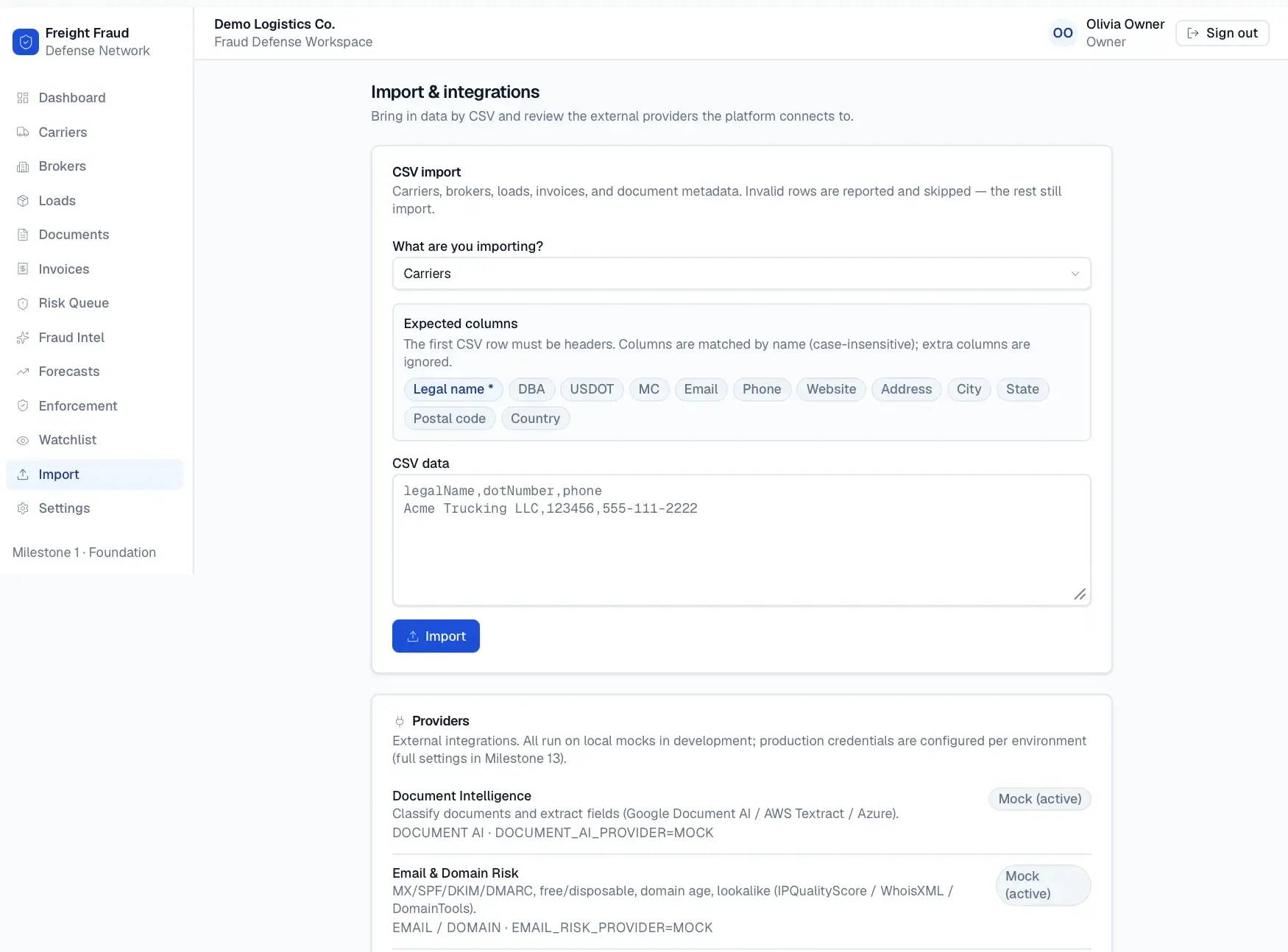
Implements a multi-signal risk scoring engine that combines deterministic scoring with an Anthropic-backed analysis agent constrained to explain and rate confidence without overriding the authoritative score. Integrates Stripe payment confirmation via signed webhooks with organization-scoped payment records, S3-backed document storage, and Auth.js authentication. Built around pluggable provider abstractions (document AI, carrier verification, email risk, TMS, accounting) so concrete data sources can be swapped in behind a stable contract.
Most logistics systems manage freight. This product defends freight.
Dashboard
Command center surfacing high-risk loads, payment holds, new carrier risks, document mismatches, and open cases as clickable cards.
Risk Queue
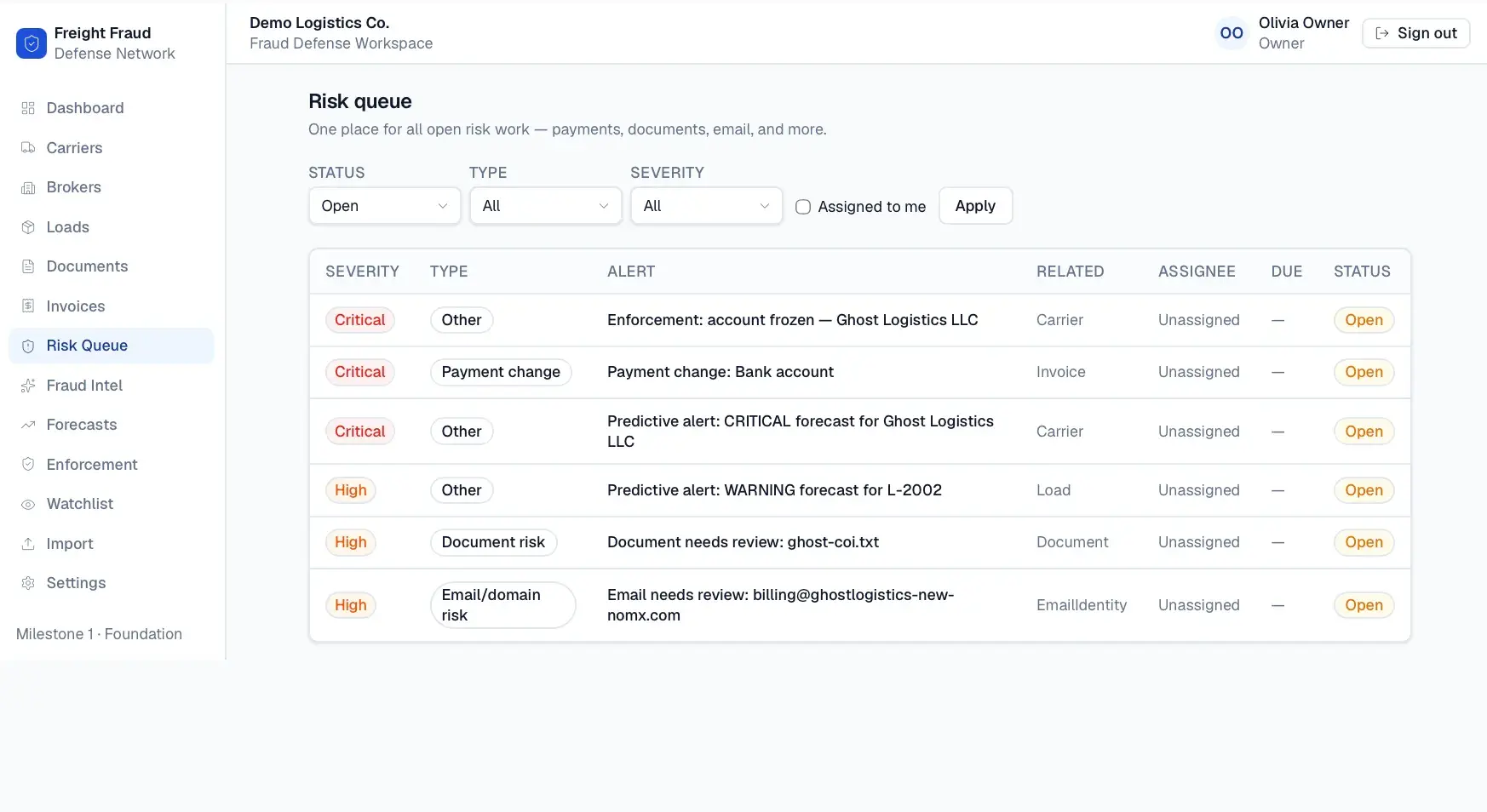
Central work queue for every item needing attention, filterable by status, risk level, entity type, and assignee.
Carrier Profile
One complete trust profile per carrier: identity, risk factors, documents, loads, communication, payment, and audit trail.
Broker Profile
Broker trust profile adding authority, bond, load-posting behavior, and double-brokering risk indicators.
Load Defense ScreenTrust Before Release
Pre-release view of a load's risk score, final status, top risk reasons, and recommended action.
Document Review
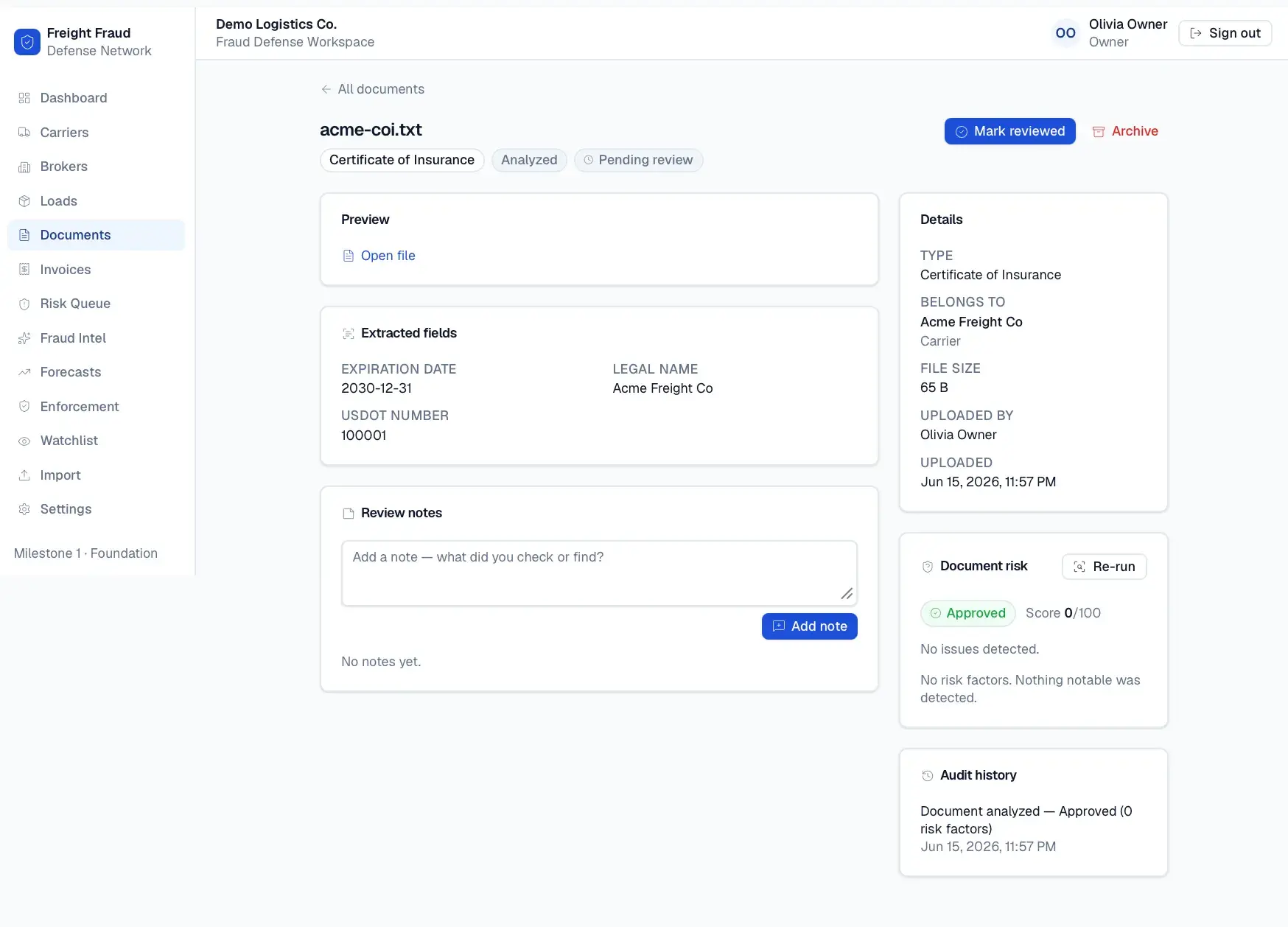
Uploads, classifies, and OCR-extracts documents, then compares fields to system records to flag mismatches and suspected edits.
Email and Domain Risk Review
Checks sender, reply-to, domain age, lookalikes, and SPF/DKIM/DMARC against known entity contacts.
Invoice and Payment ReviewPayment Change Lock
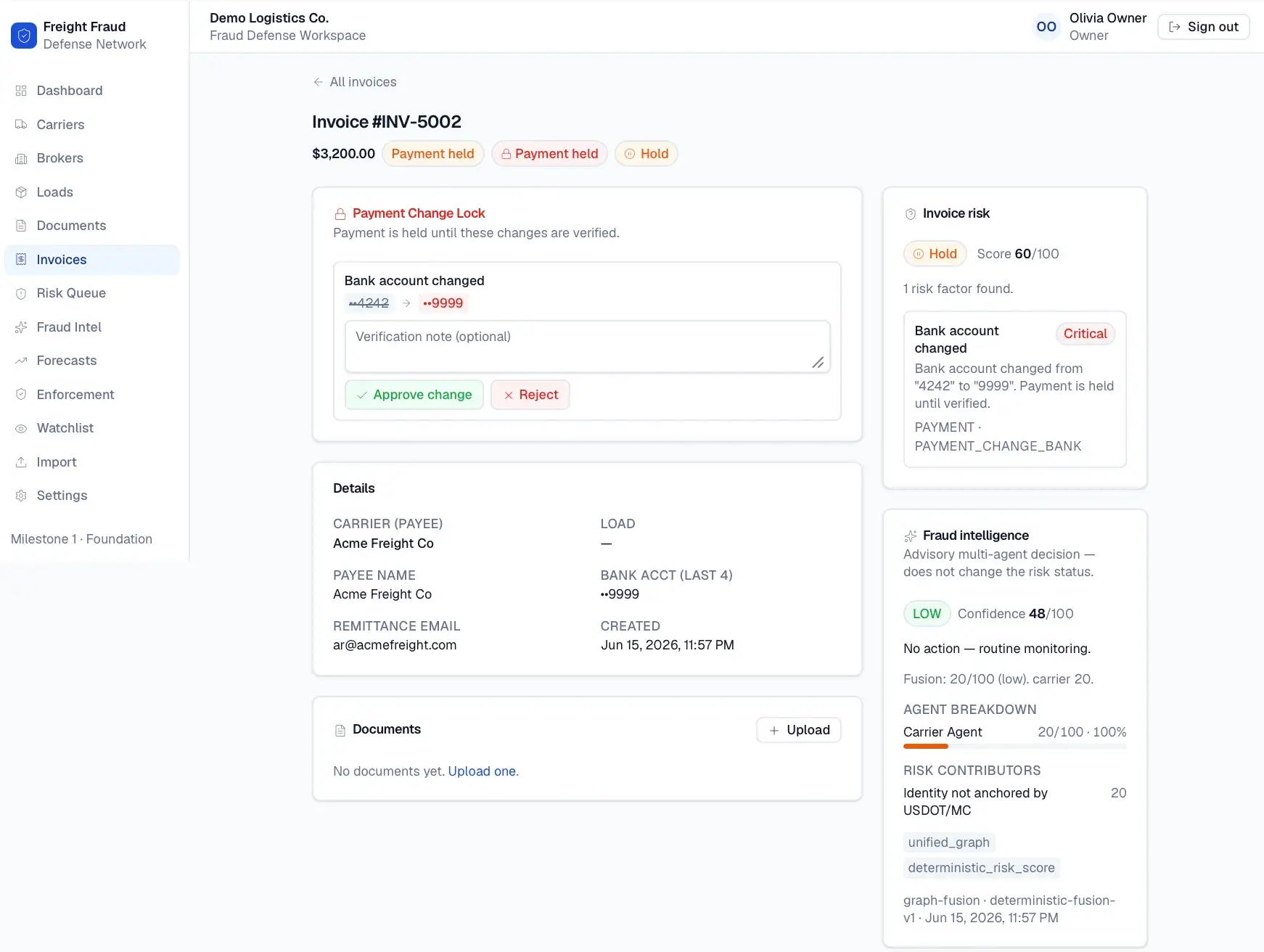
Compares invoices to loads and profiles, detects duplicates, and holds payment when instructions change.
Fraud Watchlist
Tracks known suspicious entities internally with reasons, evidence, severity, and links to loads and related entities.
Fraud Relationship Graph
Maps related entities by shared phones, addresses, emails, domains, documents, and bank/factoring info.
Verification Playbook
Recommends a concrete next action for every risk factor, with required approvals when needed.
Case Notes and Audit Trail
Logs every major action with actor, entity, before/after values, and timestamps for legal defensibility.
Risk Status
Whether a broker or carrier is who they claim to be — DOT/MC validation, name and address match, authority, and insurance status.
Whether communications are legitimate — domain age, lookalike domains, SPF/DKIM/DMARC, and reply-to mismatch.
Whether uploaded documents are authentic and consistent — field mismatches, edited PDF metadata, and reused templates.
Load-level fraud signals — first-time carrier, high-value commodity, high-theft lane, and last-minute driver or dispatcher changes.
Payment fraud signals — new bank account, payment instruction changes, duplicate invoices, and mismatched remittance.
Connections to suspicious patterns — shared phones, addresses, domains, and bank or factoring accounts across entities.
A Next.js application with server-side route handlers backing a React interface, persisting data through Prisma to a SQLite database. Documents are stored in AWS S3, payments are confirmed out-of-band through Stripe webhooks, and error monitoring runs through Sentry. External data and analysis are accessed through swappable provider abstractions rather than hard-wired vendors.
Multi-tenant AI content and growth operating system that runs a portfolio of apps as one AI-managed business.
A self-serve AI knowledge hub that turns a company's documents into a role-based chatbot, SOPs, and training.
AI command center that turns construction RFIs into summaries, risk scores, and executive reports.
Start a project and reference this one — the conversation begins with what you have already seen.
Start a project